Introduction: Why Peptide Purity Matters in Research
In laboratory research, peptide purity is a critical variable that directly influences experimental reliability, reproducibility, and interpretation. Even small amounts of impurities can introduce confounding factors that affect binding behavior, reaction pathways, or analytical results.
Because of this, peptide purity is often one of the first metrics researchers look for when sourcing materials. However, purity percentages are frequently misunderstood, oversimplified, or misrepresented in marketing materials. Understanding what these numbers actually mean — and how they are determined — is essential for responsible research.
What Does Peptide Purity Actually Measure?
Peptide purity refers to the proportion of the sample that consists of the intended peptide sequence compared to all other components present. These additional components may include:
- Incomplete synthesis byproducts
- Truncated peptide sequences
- Residual solvents or reagents
- Minor structural variants
A purity value of 98%, for example, indicates that approximately 98% of the measured material corresponds to the target peptide, while the remaining 2% consists of other detectable substances.
How Peptide Purity Is Measured
Peptide purity is most commonly assessed using High-Performance Liquid Chromatography (HPLC), a widely accepted analytical technique in biochemical research.
High-Performance Liquid Chromatography (HPLC)
HPLC separates compounds based on their chemical properties and interaction with a stationary phase. As the sample passes through the system, individual components produce peaks that can be analyzed and quantified.
The relative area of the peak corresponding to the target peptide is used to estimate purity. While HPLC is highly effective, it is important to understand that it measures detectable components, not absolute molecular perfection.
Why “100% Pure” Peptides Do Not Exist
Claims of “100% purity” are scientifically unrealistic. All analytical techniques have detection limits, and no synthesis process is entirely free of byproducts or trace impurities.
Reputable laboratories acknowledge these limitations and report realistic purity ranges rather than absolute values. Suppliers advertising “100% pure peptides” often prioritize marketing language over scientific accuracy.
Responsible researchers should view such claims as a red flag rather than a sign of superior quality.
Common Purity Ranges and What They Mean
Different research applications may tolerate different purity levels depending on experimental sensitivity.
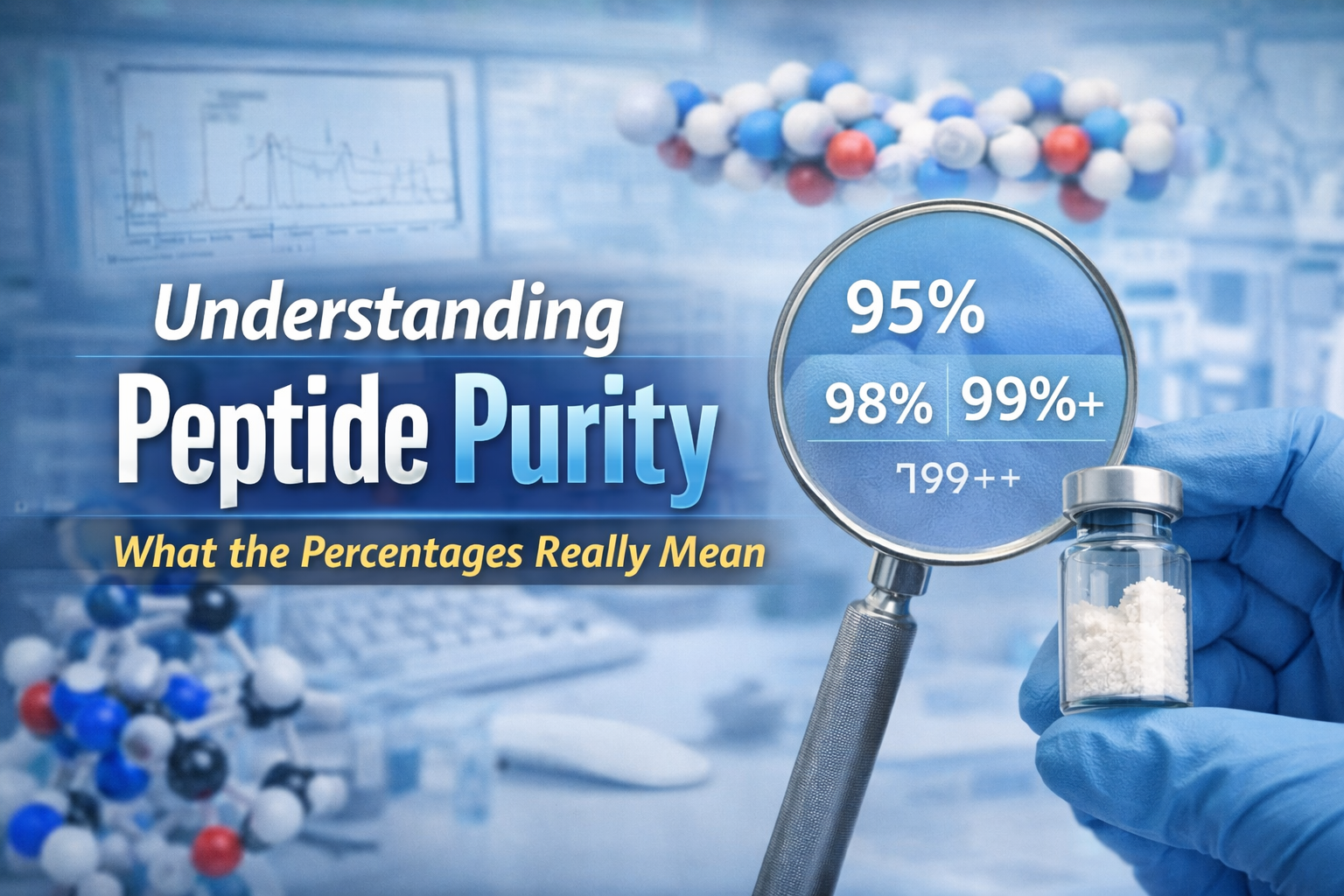
- 95% purity: Often acceptable for preliminary or exploratory research
- 98% purity: Commonly used for more controlled studies
- 99%+ purity: Preferred for highly sensitive or reproducibility-focused research
Higher purity generally reduces experimental noise, but it must be evaluated alongside proper documentation and testing methods.
Purity vs Quality: Why They Are Not the Same Thing
While purity is an important metric, it is not the sole indicator of peptide quality. A peptide may meet a stated purity percentage yet still vary in quality due to:
- Inconsistent synthesis methods
- Poor batch control
- Inadequate storage or handling
- Lack of proper documentation
True quality comes from a combination of purity, consistency, testing, and transparency.
The Role of Certificates of Analysis (COAs)
A Certificate of Analysis (COA) provides documented evidence of peptide testing and purity assessment. A valid COA typically includes:
- Purity percentage
- Analytical method used (e.g., HPLC)
- Batch or lot number
- Date of testing
COAs allow researchers to verify purity claims independently and maintain accurate experimental records.
Why Batch Consistency Matters as Much as Purity
Even highly pure peptides can produce inconsistent results if batch-to-batch variation is not controlled. Reputable suppliers track and document each production batch to ensure consistency over time.
Batch traceability allows researchers to:
- Replicate experiments
- Compare results across studies
- Identify potential sources of variation
Without batch consistency, purity percentages alone provide limited assurance.
How Impurities Can Affect Research Outcomes
Impurities may interact with experimental systems in unexpected ways, potentially:
- Altering binding affinity
- Affecting reaction kinetics
- Producing misleading analytical signals
While small impurity levels may be acceptable in some contexts, understanding their presence is essential for accurate interpretation of results.
Evaluating Purity Claims When Choosing a Supplier
When sourcing research peptides, researchers should look beyond headline purity numbers and evaluate:
- Whether purity is supported by third-party testing
- If batch-specific COAs are available
- How purity is measured and reported
- Whether claims are realistic and transparent
Documentation matters more than marketing language.
JP Peptides’ Approach to Peptide Purity
At JP Peptides, peptide purity is supported by transparency and documentation rather than exaggerated claims. We emphasize:
- Third-party testing
- Batch-specific Certificates of Analysis
- Clear, realistic purity reporting
- Ethical research-only standards
Our goal is to provide researchers with dependable materials they can trust in their work.
Conclusion
Peptide purity percentages provide valuable information, but only when they are properly understood and supported by documentation. Absolute purity claims should be viewed skeptically, while realistic purity ranges combined with transparent testing offer meaningful assurance.
By understanding how purity is measured and what the percentages truly represent, researchers can make informed sourcing decisions that support accurate, reproducible scientific research.
We’re committed to quality, reliability, and your satisfaction—making every shopping experience easy, convenient, and trustworthy.
— Emma Larson